
With 'Woodcut', Big Big Train’s future has arrived
The first full concept album from a fully underrated band

Intro
Travel back with me to 7th August 2023. On that date, I published the first full review in LP, and the album I selected was by Big Big Train: Ingenious Devices. Why? It was a new release at that time, but of more significance for me was its example as the art of the album; an extended piece of music, or a collection of songs, that flow. As a listener, you want to hear the whole piece, and you don’t want to skip a track. The focus of LP was to be on albums that achieve that goal. Ingenious Devices was a good example. It was, in reality, a kind of concept album, taking some previously issued tracks and re-recording sections, and remixing into a seamless whole, to make an Album. LP has evolved a little since then, while keeping fully constructed albums at the heart of the publication.
Big Big Train have also evolved since 2023. Ingenious Devices served as a tribute to their lead singer David Longdon, who died in 2021. The inclusion of one live track, ‘Atlantic Cable’ sung by Alberto Bravin, looked to the future of the band.
With Woodcut, that future has arrived.
Release date: 6th February 2026

Listen to Big Big Train’s Woodcut
First, the Book
Woodcut - The Making and the Meaning by Andy Stewart
The book presents context for the album. Concept albums often hit a problem when the lyrics cannot be sufficiently wordy to tell the whole story. One answer is to use the inner gatefold to set out the text in tiny type, Lamb Lies Down on Broadway style. This is often not very readable and, in the case of a story such as The Lamb, not very comprehensible. Another option is for the music to be the soundtrack to the story, mood setting rather than tale telling; for example, Pete Townshend’s approach to Lifehouse. This does depend on the associated story-telling element (in Townshend/The Who’s case, a film) getting made. In many cases, the concept leaves listeners baffled and seeking refuge in interviews and online forums as they attempt to get to grips with the concept (which may be half-baked anyway).
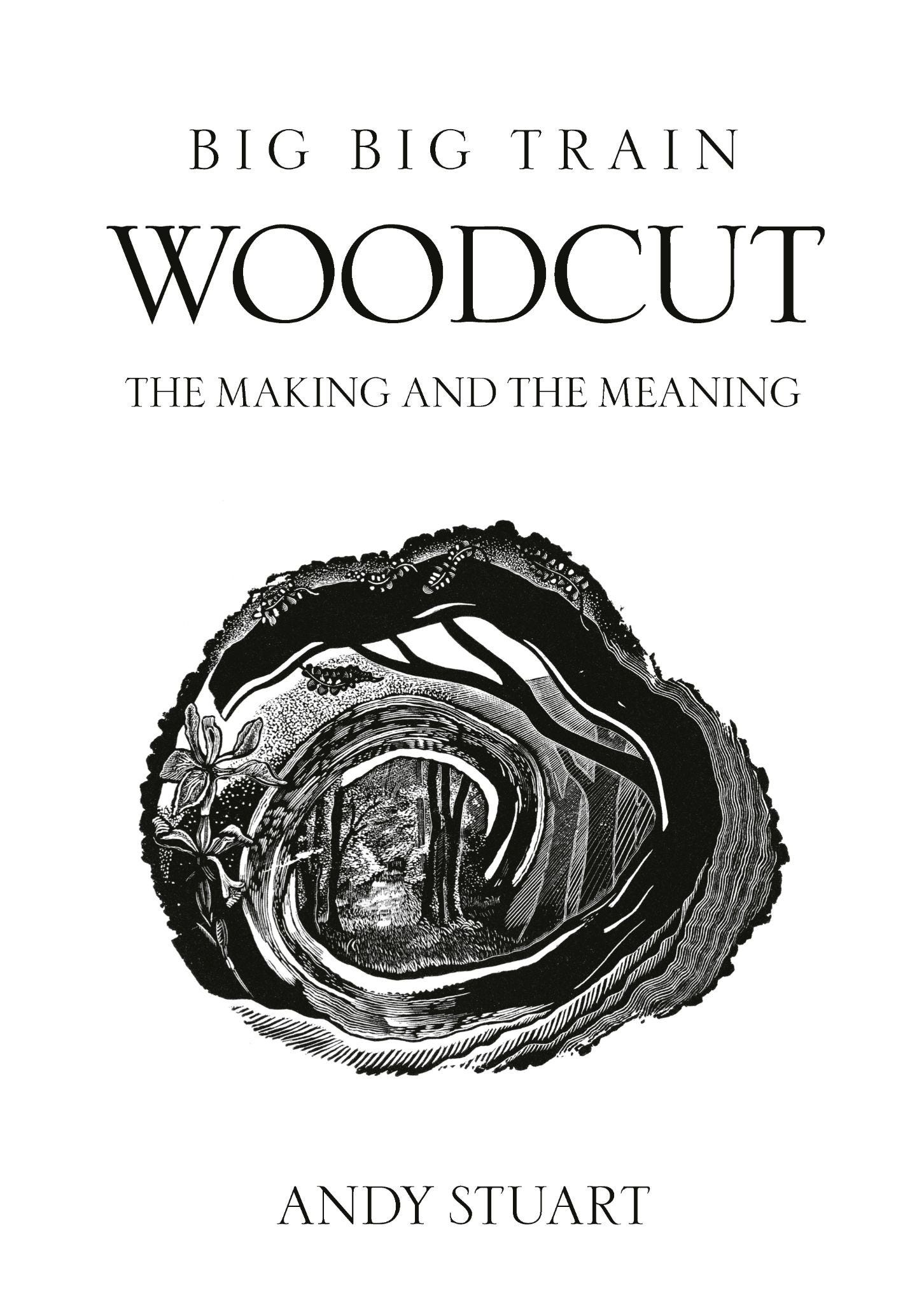
Big Big Train have found another way, by commissioning Andy Stuart to write a book; this includes details of the concept and the story, of course, but also has insights into the making of the album, as well as the lyrics and the technical details. It’s illustrated with woodcuts (in a section discussing the history and nature of the art of woodcuts) and photographs from the recording sessions.
Woodcut is the story of a tortured artist, one who works in the medium of wood carving and ink printing. Just as Big Big Train are, themselves, an authentic band in that they can play and use real instruments wherever possible (even if they then have a puzzle to solve when it comes to playing live), the artwork used for the cover was, originally, an authentic woodcut. No AI here, thank you.
“We were attracted to the idea of [woodcut] craftsmanship because it feels real and solid. And we’re that sort of 70s band, playing all our instruments live, all pretty old-school.” - Greg Spawton, Prog magazine no. 167
Above all, the book demonstrates the Big Big Train approach. Detailed. Thoughtful. Emotional. And going beyond what was required. You’ll gain a good sense of the music and the roles of the individual musicians both as songwriters and as players. It’s not necessary to read the book to enjoy the album, but you’ll uncover hidden depths if you do. If you’re not an existing Big Big Train fan, you might think there’s a little too much discussion on how this new album is a masterpiece, how it redefines prog, and how everything about this project is brilliant. This isn’t, though, designed to be a critical review, it’s a companion to the record. It is published by Kingmaker, run by BBT’s manager Nick Shilton and the band’s leader Gregory Spawton. Fair enough and, as always, be aware of sources.
Which begs the question: Is Woodcut as good as the book claims it is? It’s time to listen.
Now, the Album
Woodcut
Woodcut is a suite of music. It plays from beginning to end with no gaps between tracks. It is possible to identify separate songs, and three were issued in advance of release as ‘singles’, but the music and the lyrics make better sense in the context of the whole. In the book, Stuart does run through the album track-by-track, placing as much emphasis on the development of the story as on the music. It’s not that one is more important than the other; the two are fully integrated here, in BBT’s first full-blown concept album.
Concept albums have a reputation for being incomprehensible. People are still analysing the story of The Lamb Lies Down on Broadway over fifty years later (including Genesis). Likewise The Who’s Tommy and Lifehouse. BBT’s Woodcut is founded on storytelling with a plot that can be followed, while still using metaphor and subtlety.
If you are familiar with the sound of Big Big Train, you’ll feel immediately at home here, while being intrigued by developments in the BBT soundscape. Bravin was an inspired choice given the terrible necessity to find a new singer after David Longdon’s passing; not only can he perform the existing BBT songs with similar power and ability to raise goosebumps, but he rapidly found a way of working with Gregory Spawton and the other mainstays of the band to create new music. It was Bravin’s role, as producer, to pull the various lyrics, song segments and arrangements into a coherent whole; into an Album.
Above all, this is an album that will go on revealing more and more detail over a long period of time. There’s so much to take in. I was sent a review copy, but I suspect it will take months to get to a complete appreciation of this music. I’m certain that my respect for the achievement of BBT will only go in one direction. If you’re seeking a ‘no skip’ album, this is it.
So, while it cannot be a definitive verdict, this is an opportunity to note the early stand-out passages on what will go on to become at the very least a classic Big Big Train album, probably a classic prog rock album and may well join the ranks of classic albums everyone should hear.
In the book, Andy Stuart asks: “In a cultural landscape that measures artistic value through the sheer brute force of likes and saves, how can one judge in the moment whether any record will have enough staying power to become a classic?” Of course, one cannot know, but one can sense. It is a judgement, it is subjective, and no music is for everyone. But quality, authenticity and cultural achievement can be recognised even if not to your taste. Woodcut is a cultural achievement.
Stuart discusses musical moments that stop you in your tracks. In the course of charting The Artist’s story, there are several.
‘Warp and Weft’ has echoes of Gentle Giant and is an early example of the vocal harmonies that occur throughout the record. Close harmony has often featured on BBT recordings. As with several other aspects of their musicianship, they reach new heights here. The songwriting is spread across the band, and here it’s drummer Nick D’Virgilio’s song that benefits. The opening songs on Woodcut place the album as a thing of beauty, melodic/symphonic/folk rock with sparkling highs and hints at the deeper lows experienced by The Artist. ‘Warp and Weft’ takes these already outstanding songs - ‘The Artist’, ‘The Lie of the Land’, ‘The Sharpest Blade’, ‘Albion Press’, ‘Arcadia’, and the instrumental ‘Second Press’, and takes us into new musical territory as The Artist grapples with the anxiety of creation.
The Artist
‘The Sharpest Blade’ is one of several songs with lyrics by violinist Clare Lindley, and she shares the lead vocal with Alberto Bravin to great effect. BBT have always been a band, even as members have come and gone (they sometimes refer to themselves as a collective) and never more so than on this album, with every member making a strong contribution. This track also underlines how this BBT album, while a real development, has links with the band’s past - Folklore. Stuart makes musical links with the Kate Bush song ‘Jig of Life’ and lyrical links to the Genesis song from The Lamb, ‘The Lamia’: placing trust in beauty. Placing trust in this beautiful song.
Gregory Spawton’s ‘Chimaera’ features a beautiful melody and uplifting trumpet by John Mitchell. In the past, BBT have used a brass band to great effect. One of their changes of direction is making Mitchell a full member and just using a solo brass instrument to add colour and emotion. Less is more (although the full band is a wonderfully emotional addition when present, too).
In some ways the phrase ‘adding colour’ isn’t quite right, because John is colour blind, to the point of dreaming in black and white. We learn from the history of the craft of woodcuts, engagingly told in the book, that it was initially a monochrome medium. These aspects feature in the song ‘Dreams in Black and White’, notable also for melody lines from across the album being combined as a harmonic vocal masterclass. This is not simply a technical exercise but is another of those ‘moments’. Full concept albums, such as this, often use recurring themes and melodies to bind the different songs together. Woodcut is arranged in the tradition, and within innovation in how the binding is achieved. This is progressive music, not simply something that can be efficiently filed away as ‘prog rock’.
‘Dead Point’ opens in the style of Queen (not words I thought I’d be writing) before some Rick Wakeman-style synth. Again, not the band as we knew them, but still recognisably BBT.
There are a number of short, linking instrumentals across the record. The pure beauty of ‘Hawthorn White’ allows a reflective pause before the two closing tracks.
In the book, it is speculated that ‘Counting Stars’ and ‘Last Stand’ are destined to become BBT’s ‘Supper’s Ready’ in terms of how they combine to conclude the album. ‘Supper’ obviously has a very strong last few minutes, with ‘Apocalypse in 9/8’ leading to ‘As Sure As Eggs is Eggs’ which repeats some of the musical themes from the previous twenty minutes. BBT have produced a different suite of music when compared with ‘Supper’, and while there will always be comparisons with Genesis for melodic prog bands to contend with, don’t go into Woodcut expecting something that sounds like ‘Supper’. This is the sound of BBT.
Rikard Sjoblom’s guitar solo at the climax of ‘Counting Stars’ is melodically and tonally powerful, bringing the album itself to a strong finish, and segueing into ‘Last Stand’, with Spawton’s lyric pulling the threads of the story together. The final words of the album: “There’s gold in the skies / Find it / Keep moving on.”
There’s so much more here. I’ve barely mentioned the significant keyboard contributions of Oskar Holldorff, the drumming by Nick D’Virgilio, or the force of Gregory Spawton’s bass. The forthcoming live gigs promise to be even more special than a BBT show normally is.
Some albums are reviewed then filed away, with the risk they’ll never be heard again, because against all the odds there’s still so much terrific new music being produced, across the world. That will not be the fate of Woodcut.
Woodcut is a meaningful achievement. Some bands make a lengthy series of albums without ever producing one that can be identified as a lasting classic. With Woodcut, BBT have their classic, an album accessible to new listeners while rewarding existing Passengers and revealing ever deeper detail in the music. I’ve a feeling that this version of BBT have only just hit their stride. Is it greedy to believe they will top Woodcut?
How to buy
Big Big Train website:
https://www.bigbigtrain.com/
Bandcamp:
Coming Next in LP
LP>PlayList reaches #066 on Thursday. New reviews now appear every Tuesday, and I also post regularly in Substack Notes.
A thoughtful and deeply felt exploration of Big Big Train’s Woodcut—not just as an album, but as an artistic culmination shaped by loss, renewal, and long-form craft.
What resonates most here is the insistence on listening to music as a whole again: narrative, harmony, recurring themes, and emotional architecture unfolding over time. That sense of patience feels almost radical now.
Beautifully argued, historically grounded, and clearly written from genuine connection to the music.
Well worth spending time with.